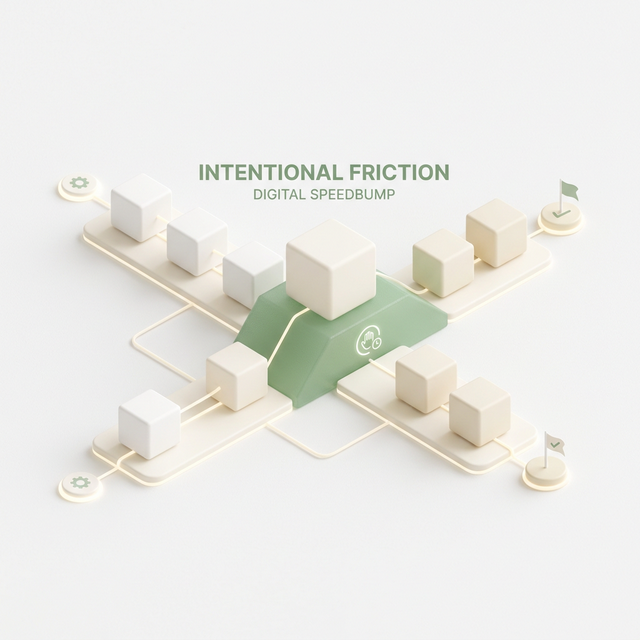
The consensus in software design is that all friction is bad and user journeys must be frictionless. But when we transition from consumer apps to high-stakes operational workflows, the goal isn't speed, it's safety and precision.
The Friction Framework
When and how to introduce intentional slowdowns to improve automated decision quality.
Speed is not always quality
Teams optimize for speed and later discover higher error rates at high-stakes moments.
Bad friction vs good friction
Bad friction is confusion and redundancy. Good friction is intentional review, confirmation, and ownership.
High-stakes moments need design controls
Financial/legal/trust-critical decisions should include rationale visibility, source checks, and explicit human approval.
Review gates reduce downstream cost
A lightweight pre-done checklist catches avoidable mistakes before they spread into production ecosystems.
Practical implementation
Use three required checks: output reviewed, acceptance criteria met, and potential risks noted.
The real metric
Track decision quality and rework rate across the workflow, not just immediate response speed.