I map where AI belongs. I design how it works.
Adding AI is easy. Making it work for the people using it is the job, and I do it with your team.

 3X WEBBY WINNER
 World Design Capital Ambassador
 Good Design Award
 Board of Directors, UX Speakeasy ('22-'25)
Companies are using AI at wildly different levels, from a few scattered tools to deep, daily workflows.
But most can't see what they're missing: where AI could move the business next, or how much value is being left on the table.
I help organizations find those gaps, design the product decisions that close them, and turn them into measurable, daily outcomes.
Bridging the gap between AI capability and user reality.
AI Opportunity Mapping
Finding where AI actually relieves a bottleneck in the workflow, not where it is easiest to bolt on.
Most AI features exist because the model could do it, not because the user needed it there. The job is knowing the difference.
Read: AI Pilots Are Easy. ROI Is Hard. →AI Workflow Architecture
Reliable, repeatable workflows built on raw AI output, so teams move faster with fewer errors.
The most valuable AI in your product will not look like a chat window. It will look like work that finishes itself.
Read: Beyond the Chatbox →Human-in-the-Loop Systems
Systems that keep people in control, so AI earns trust and gets adopted instead of resisted.
Full autonomy is a demo. Trusted delegation is a product. People adopt the AI they can check.
Read: Human in the Loop AI →Agent-Ready Experience
Design systems and flows that machines can complete: semantic code, structured data, and agent-testable journeys.
Your next customer may be an agent acting for a human. If machines cannot use your product, they will recommend one they can.
Read: Is Your Design System AI-Ready? →Context Architecture
The context systems agents need to do real work: skills, memory, retrieval, and the right model for each job.
Agents rarely fail because the model is weak. They fail because nobody built the library that tells them what is true.
Read: Why AI Adoption Stalls After the Pilot →Trust & Governance UX
The guardrails and decision boundaries that make the rest of the architecture hold up in regulated, high stakes environments.
Governance is not the brake pedal. Done right, it is the license to drive fast.
Read: AI Governance for Teams That Move Fast →The Trust & Adoption Layer
01
Efficiency
Efficiency is about removing friction across the whole workflow so teams move faster. One example is automating mundane tasks or making information easy to find, freeing your best people to spend their talent on what matters most.
02
Trust
People act on AI they can trust. Showing why a recommendation was made, with sources and clear risk levels, turns hesitation into confident decisions.
03
Ease of Use
Adoption sticks when AI fits the way people already work. New capability lands inside familiar workflows, so it feels intuitive instead of disruptive.
04
Foundations
Reliable AI needs a consistent foundation. Standardized building blocks keep output presented the same way every time, so the experience stays dependable as it scales.
05
Cost
Success is measured in business value, not token usage alone. The full picture of value added and productivity gains must factor into the P&L.
Latest Insights
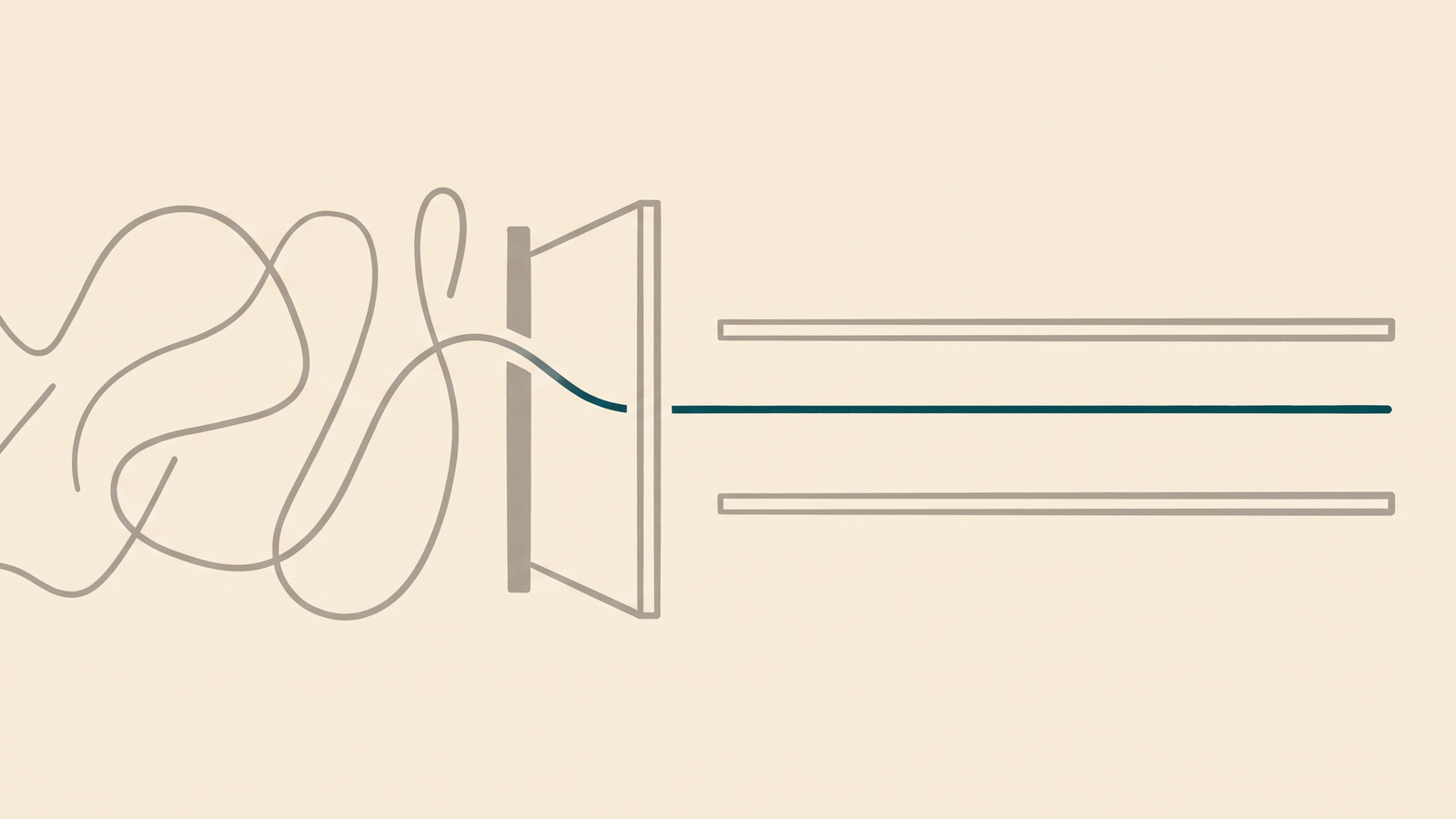
How to Put Your AI Agent on Rails
My AI assistant kept forgetting the same design rules. I stopped repeating them and wrote them into code. Here's the pattern, the numbers from the first real run, and why a team can own theirs.

How to Make Your AI Workflow Audit-Ready
AI gets your team to 60mph in an afternoon. The last few miles per hour decide whether the feature wins or flops, and that climb takes a different kind of person in the room.