


Chapter 01 · Challenge
Everyone owned a part. No one owned the whole.
Competitors were closing in on Walmart's unfair advantage, same-day delivery. Down the street, local stores needed every bit of help to weather corporate competition. Each had what the other needed: Walmart had the shoppers and the drivers, and local stores had what Walmart didn't stock. But inside Walmart, Marketplace, Walmart+ and the stores each owned a piece of the same customer, and no one owned the seams between them.
- Marketplace
- Walmart+
- Stores
Chapter 02 · Strategy
One order, filled by Walmart and the store down the street
The question was how to build one business that works for both. A shopper orders in a few minutes. Walmart fills what it stocks, local stores fill the rest, and a driver from Walmart's Spark network brings it all the same day. It's a community and scale play: Walmart stays competitive while lifting local economies. The catch: it was previously all built for shipping, from the pipeline to the names and the data. Bringing in a local buyer meant translating all of it: the nomenclature, the data structure, the design and the language.
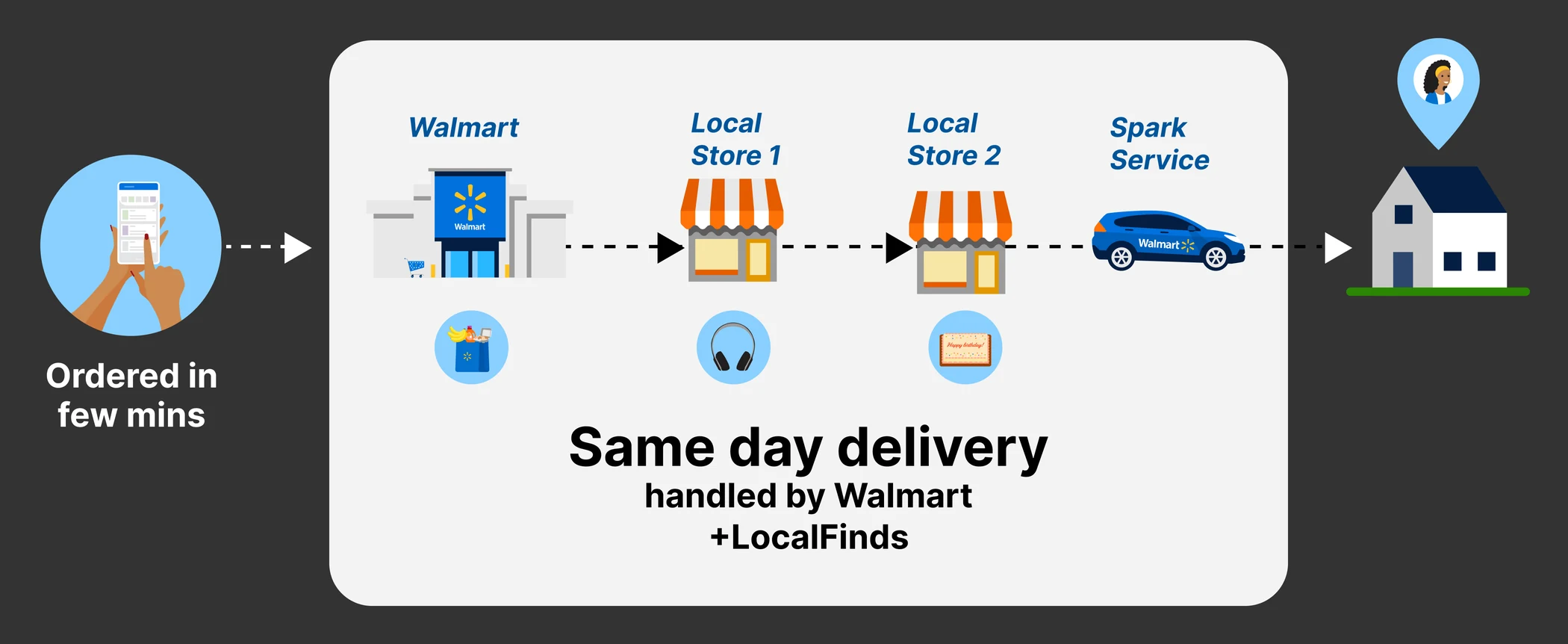
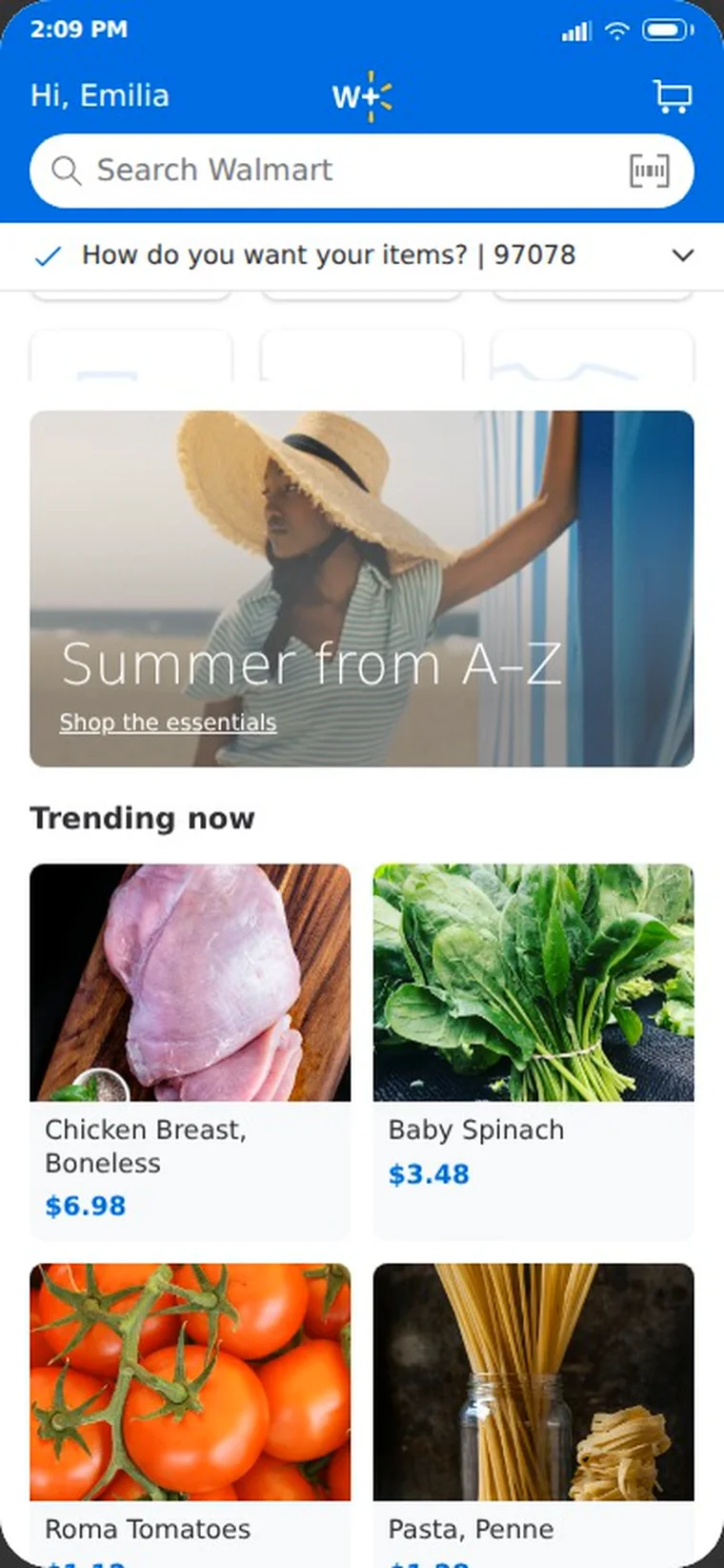
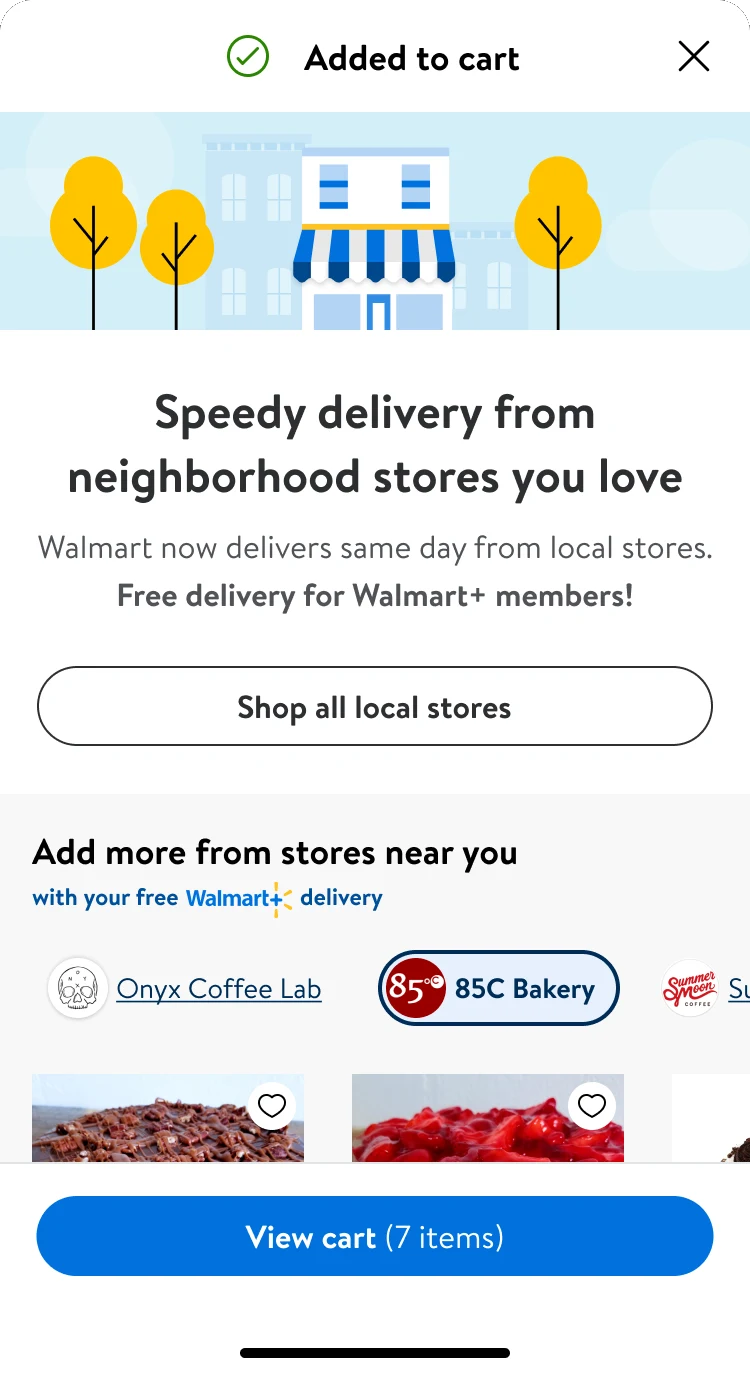
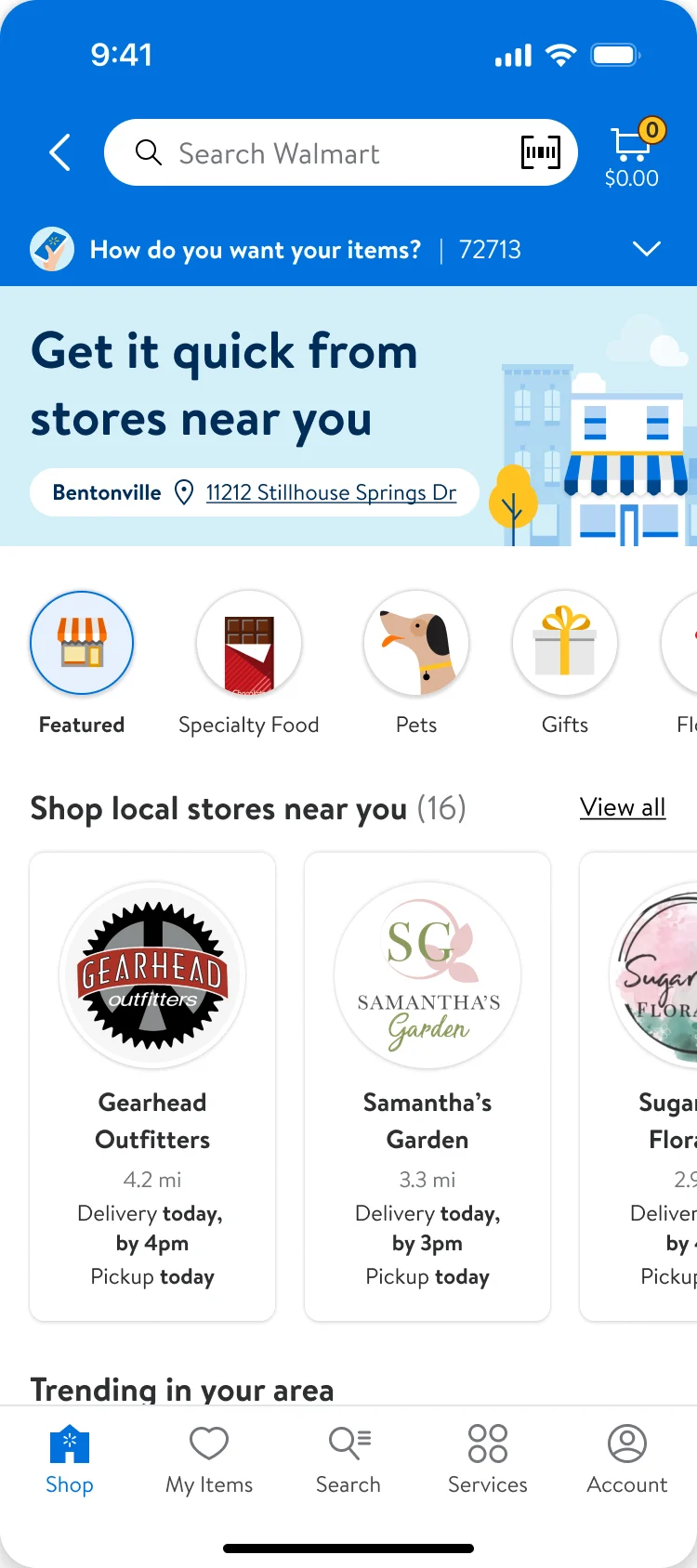
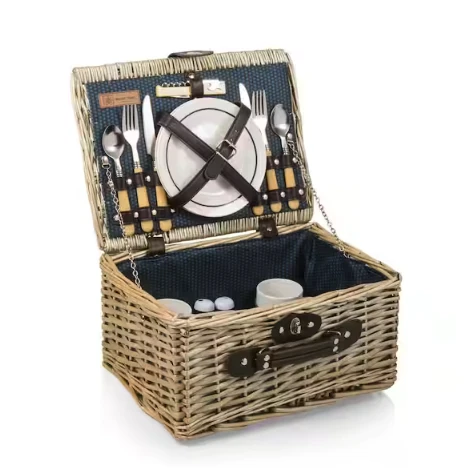
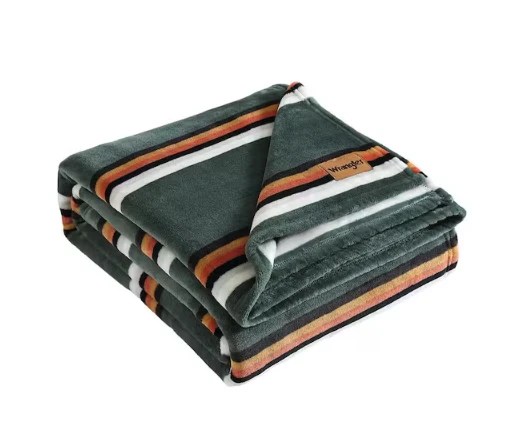
One order in a few minutes, filled by Walmart and two local stores, delivered by one Spark driver the same day.
Chapter 03 · The map
LocalFinds wasn't a project. It was a bridge.
LocalFinds touched almost everything a seller does: onboarding, store setup, returns, marketing and payments. The customer sees one journey. So should we. With the other design leaders, I put every seller track on one map, from acquisition to ads, laid across the journey from onboarding to growth. LocalFinds was track 10, and it crossed almost every other track. Each team could see where its work met ours.
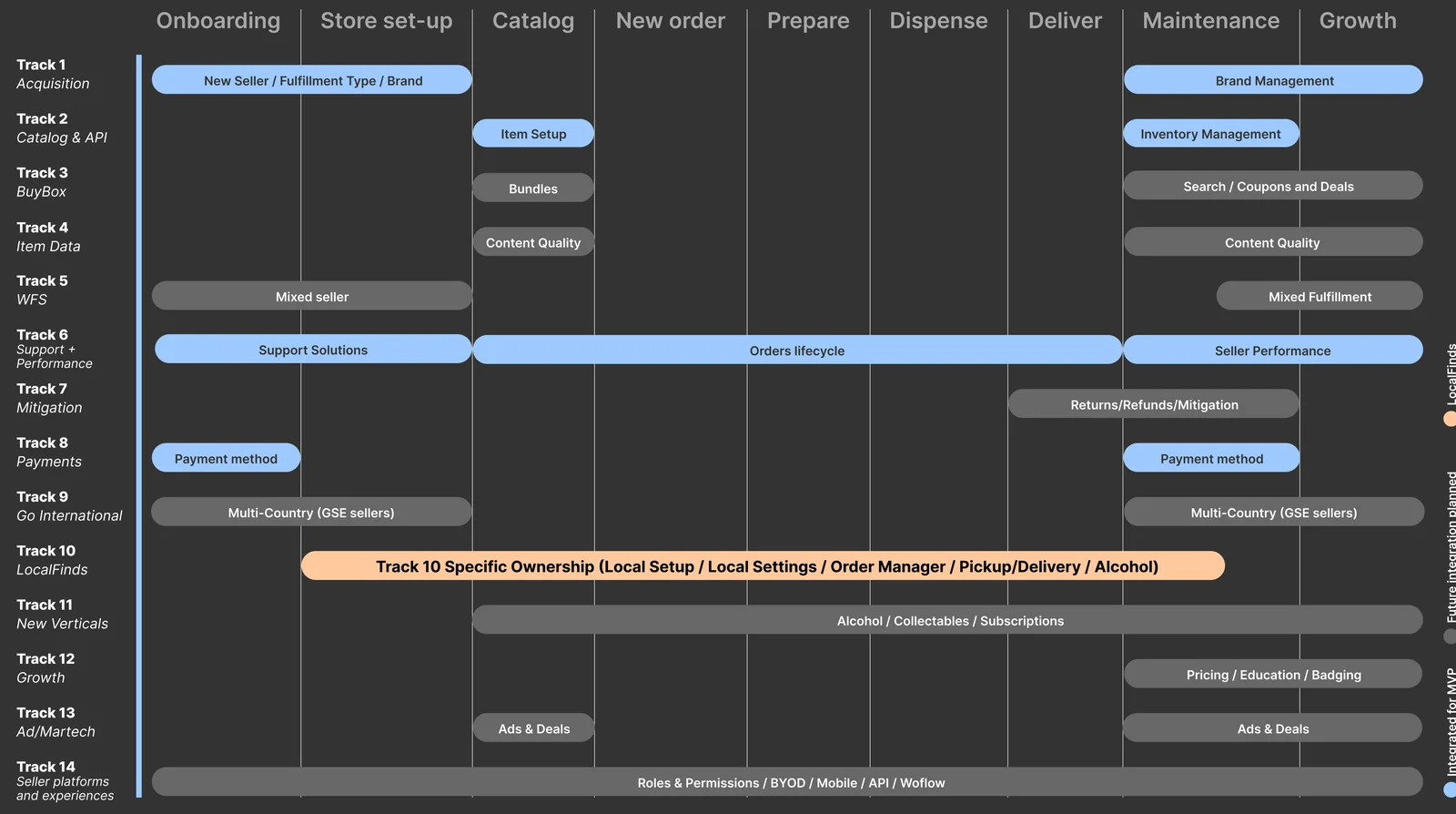
One page anyone could read. Blue bars were in the first release, grey bars were planned, and the orange bar was ours.
- One audienceIn a workshop, our product, engineering, design and business partners agreed on who we were designing for, and named what we didn't know yet.
- One blueprintThe user research team and I planned the study together. What we learned became a service blueprint and a journey map, so business goals, seller needs and the roadmap lined up.
- One voiceFourteen teams, including the Walmart+ shopper side, shared one brand, voice and tone, and one product recommendation architecture, so sellers and shoppers met one Walmart, not fourteen.
Chapter 04 · Build
Built for the store owner first
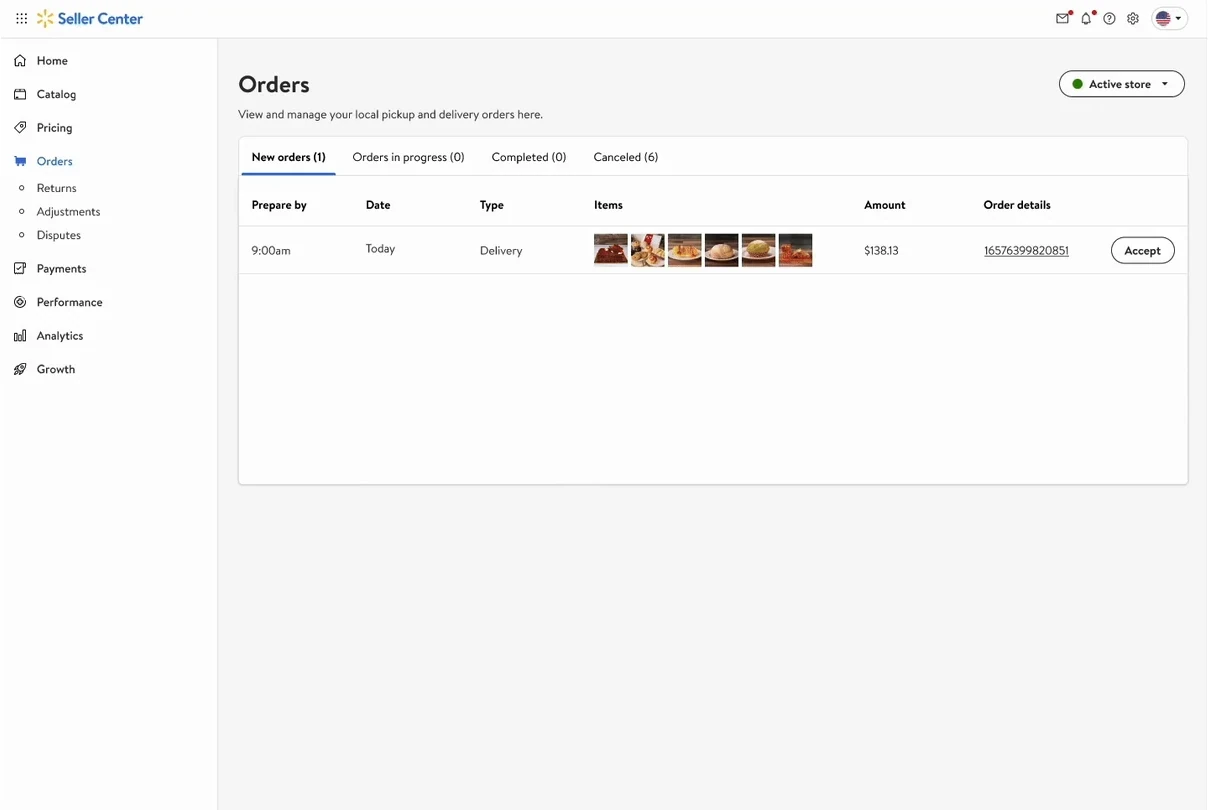
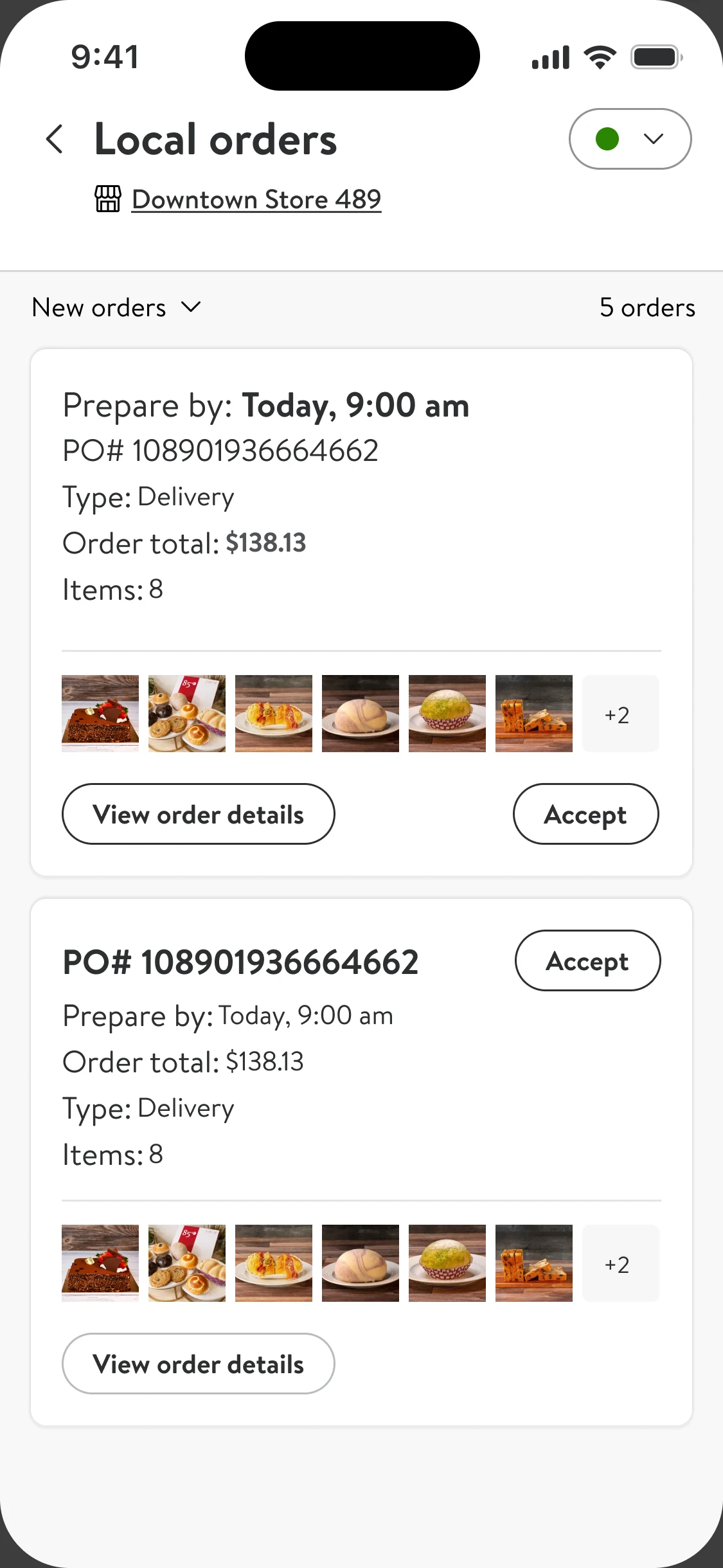
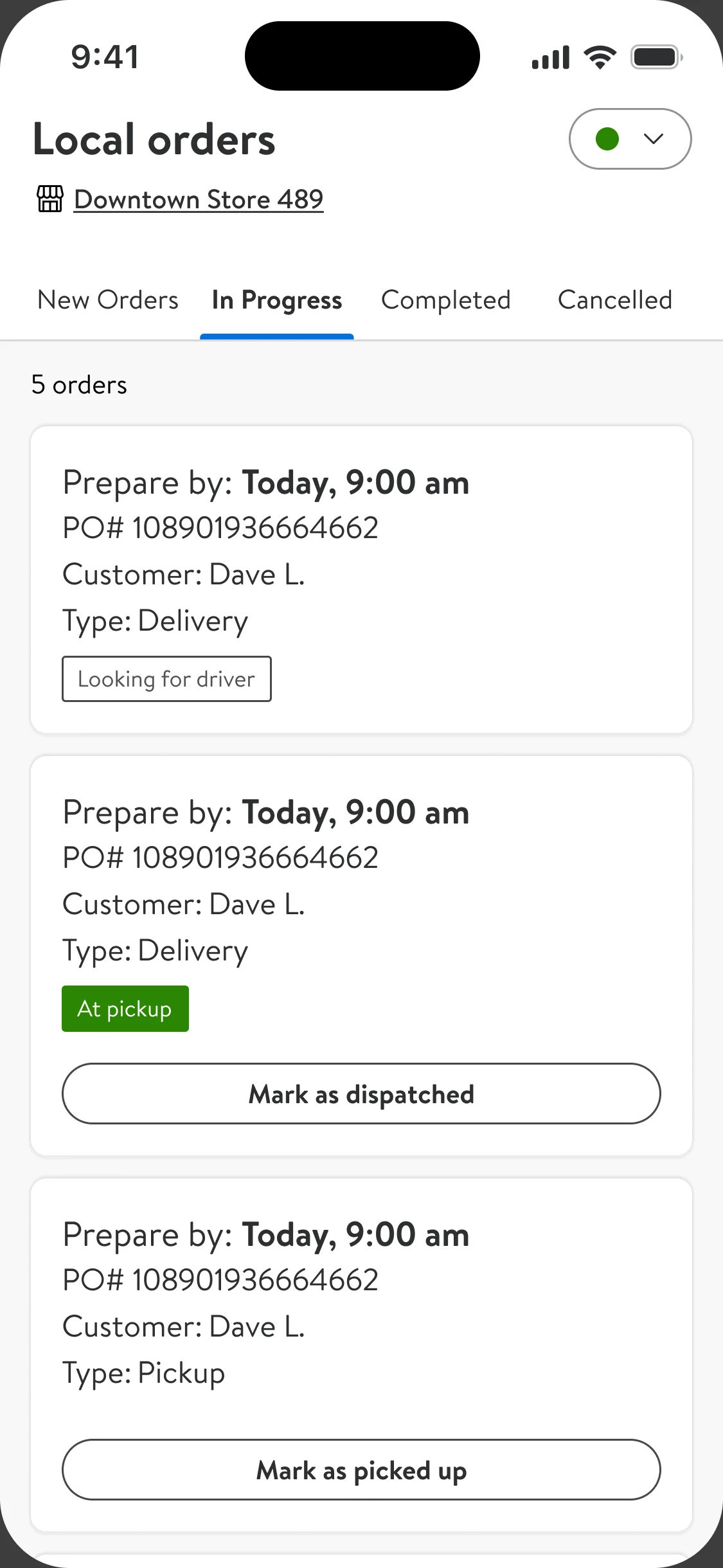
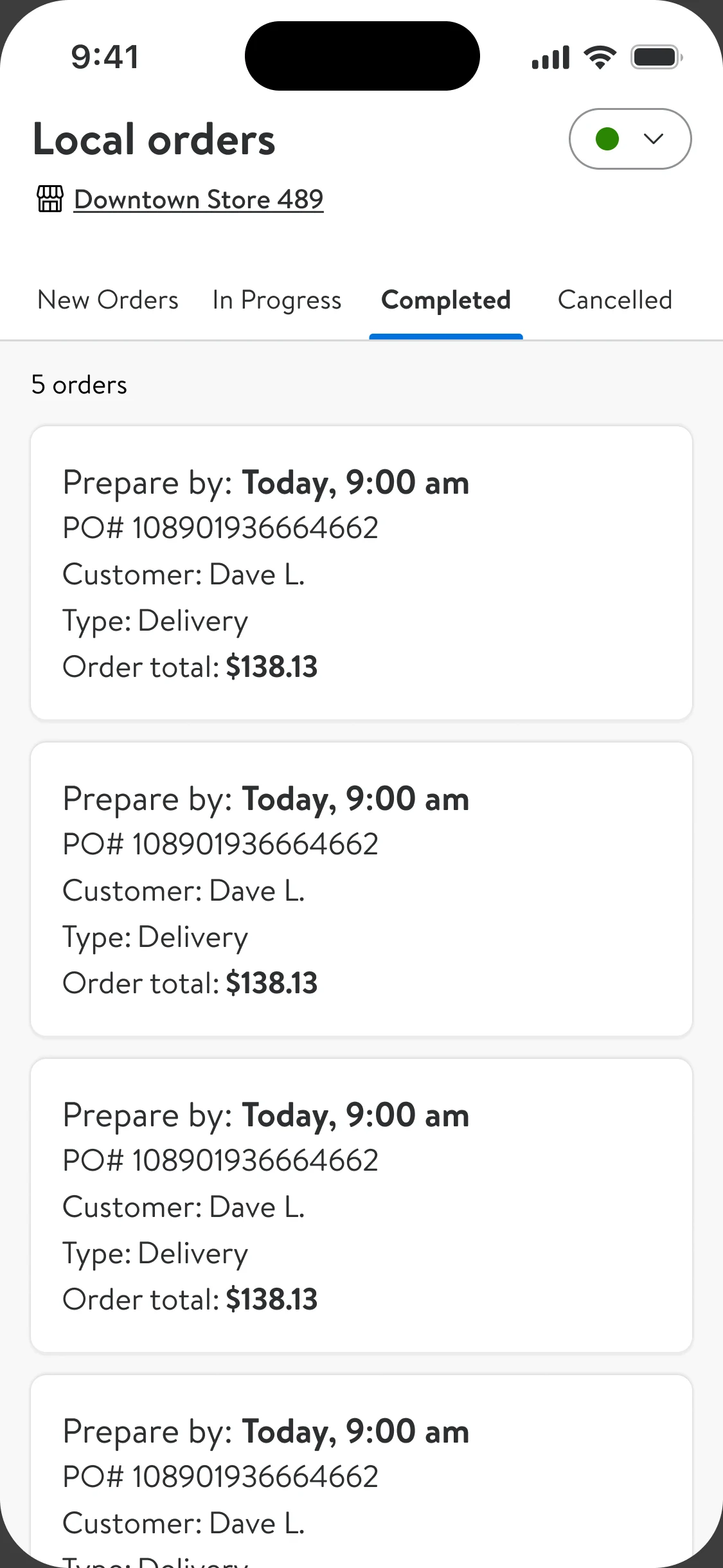
No local stores, no LocalFinds. So the seller side came first, in the order an owner lives it: open the store, load the catalog, then run the day from the order manager. In onboarding, AI drafted the store's branding and product descriptions, and seller setup got 27% more efficient. I directed the prompt engineering, and it shipped live.
Chapter 05 · Results
Fourteen teams, one journey
What I took from it: the gap is rarely skill. It's alignment, and alignment can be designed. The deck's dollar figures were projections, so they stay off this page until they are measured.
Chapter 06 · My role
What I personally led
- 0 to 1Led design for LocalFinds from the first question to the first release, with product and business as one team.
- AlignmentThe seller map, built with the other design leaders, and the workshop and research plan that put 14 teams on one journey.
- ArchitectureThe product recommendation architecture, and the brand, voice and tone all 14 teams shared.
- AIDirected the prompt engineering behind AI-drafted seller branding and product descriptions in onboarding, shipped live.
Next project
Turning a fragmented ecosystem into one experience
Illumina: three UX orgs and 28 stakeholders aligned on a multi-year unification, and the purchasing tool 85% of revenue ran through.
Read the case